

Qatar is intensifying its mediation efforts between Washington and Tehran, but disagreements over sanctions, the Strait of Hormuz and Iran’s nuclear program continue to block a breakthrough.
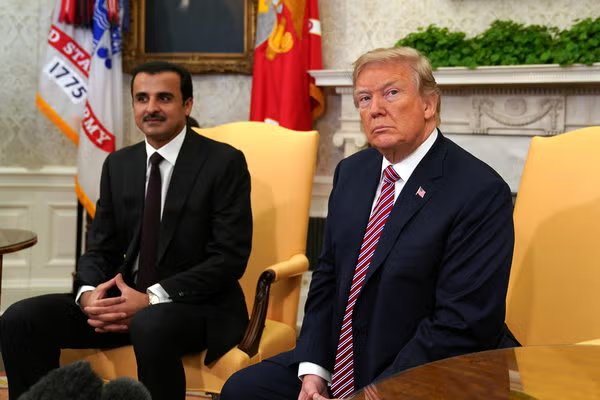
U.S. President Donald Trump met Qatar’s Prime Minister Sheikh Mohammed bin Abdulrahman Al-Thani in Washington on Monday, November 9, as diplomatic efforts to end the war with Iran continued. The meeting comes amid growing pressure to find a way out of a conflict that has disrupted regional security, threatened international shipping and contributed to a global energy crisis.
Qatar has become one of the key intermediaries between the United States and Iran, carrying messages and attempting to narrow the differences between the two sides. The Qatari prime minister had visited Tehran the previous week and was also scheduled to meet Vice President JD Vance.
Despite the renewed diplomatic activity, officials have warned that an agreement is not imminent.
Iran’s proposal faces U.S. opposition
At the center of the negotiations is an Iranian proposal that would require Washington to end its naval blockade of Iranian ports, ease some sanctions and halt its bombing campaign.
In return, Tehran would end its blockade of the Strait of Hormuz, a vital shipping route through which a significant share of the world’s oil and gas supplies normally passes. Negotiations over Iran’s nuclear program and remaining sanctions would follow.
The United States has rejected the proposal. Secretary of State Marco Rubio described Iran’s conditions as unrealistic and said the negotiations were not on the verge of a breakthrough.
Iranian Foreign Ministry spokesperson Esmaeil Baghaei defended Tehran’s position on Monday, describing it as the most reasonable proposal currently on the table.
The opposing positions reveal the central problem facing mediators: Washington wants assurances on security and Iran’s nuclear activities, while Tehran is demanding major concessions before moving forward.
Trump says the U.S. is ready to strike again
Following his meeting with Qatar’s prime minister, Trump told Reuters that Qatar and Saudi Arabia preferred a peaceful solution to the conflict.
However, the president also made clear that military options remain available.
“We’re ready to go anytime we want,” Trump said when asked about the possibility of renewed strikes against Iran. He also indicated that he was not in a rush to restart military operations and was prepared to see how the situation developed.
The comments reflect the administration’s dual approach: continuing diplomatic contacts while maintaining the threat of further military action.
Iranian state media reported that U.S. forces had struck Iran’s Qeshm Island overnight. A local official said the reported strikes did not affect vital infrastructure or services. The United States had not publicly confirmed the reported operation in the Reuters account.
The Strait of Hormuz remains a major obstacle
The Strait of Hormuz is one of the most strategically important waterways in the world. Any prolonged disruption to shipping through the passage can affect energy markets, transportation costs and economies far beyond the Middle East.
Attacks on commercial vessels in the Gulf and around the strait have continued, according to Reuters, adding to concerns about maritime security.
The conflict has already contributed to a global energy shortage and increased pressure on countries dependent on energy imports.
For Washington, securing shipping routes is a major concern. For Tehran, control over the strait and the U.S. naval blockade are central bargaining issues.
A long period of uncertainty
Diplomatic pressure is also increasing because of the political and economic costs of the conflict. Senior U.S. Republicans have pointed to the war as one factor behind the party’s poor performance in the recent midterm elections.
A senior official from the United Arab Emirates, Anwar Gargash, has warned that a comprehensive political settlement between the United States and Iran appears difficult. He said the region should prepare for a prolonged period of uncertainty.
For now, Qatar’s mediation offers another channel for communication between Washington and Tehran, but the fundamental disagreements remain unresolved.
Trump’s meeting with the Qatari prime minister signals that diplomatic efforts are continuing. It does not, however, mean that a ceasefire or final agreement is close.
The next steps will depend on whether the two sides are willing to reconsider their demands — and whether mediation can prevent the conflict from escalating again.
Sources
- Reuters — Trump to meet Iran war mediator Qatar, no imminent deal seen
- Reuters — Trump says Qatar and Saudi Arabia want a peaceful solution, but U.S. is ready for strikes
- Axios — Trump’s meeting with Qatar’s prime minister and mediation efforts
- Al Jazeera — Latest developments in U.S.–Iran diplomacy


Leave a Reply