

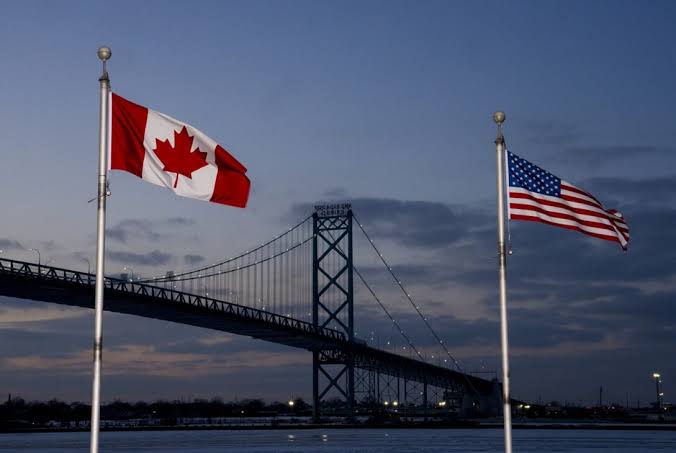
Washington says it sees little urgency for a new agreement with Canada as additional import restrictions and possible 50% tariffs loom.
The trade dispute between Canada and the United States is entering another tense phase after Washington said it sees little urgency to reach a new agreement with Ottawa.
U.S. Trade Representative Jamieson Greer said Friday that the Trump administration was comfortable maintaining the current trade standoff, even as additional restrictions on Canadian goods are scheduled to take effect.
Washington has also threatened tariffs of 50% on Canadian automobiles, auto parts and steel from January, according to Reuters.
A major economic relationship under pressure
Canada and the United States have one of the world’s most integrated economic relationships.
Businesses on both sides of the border rely on cross-border supply chains, particularly in manufacturing, automobiles, energy and agriculture.
New tariffs can therefore have consequences beyond the companies directly targeted.
Higher import costs can affect manufacturers, suppliers and eventually consumers.
The current dispute has already produced retaliation from Canada and raised questions about the future of the North American trade relationship.
Canada looks toward Europe
At the same time, Canadian Prime Minister Mark Carney has been seeking closer economic and strategic relationships with Europe.
Canada is attempting to reduce its dependence on the U.S. market by increasing trade and investment relationships elsewhere.
That effort has produced an extraordinary proposal from Brussels.
The proposal would not make Canada an EU member in the traditional sense.
Instead, it would create a new form of structured cooperation between Canada and the European bloc.
Why this matters
The Canada-U.S. dispute is therefore becoming about more than tariffs.
It is also influencing Canada’s broader economic strategy.
Ottawa is looking at Europe as a potential partner in trade, defense, technology, energy and critical raw materials.
For Washington, meanwhile, the continuation of the dispute reflects a broader effort by the Trump administration to renegotiate America’s trade relationships.
What happens next?
The immediate focus will be on whether Washington and Ottawa return to serious negotiations.
The potential January tariffs on Canadian autos, parts and steel could become another major point of confrontation.
At the same time, Canada’s developing relationship with Europe could become increasingly important.
The outcome could influence North American supply chains, Canadian businesses and the economic relationship between two longtime allies.



Leave a Reply