

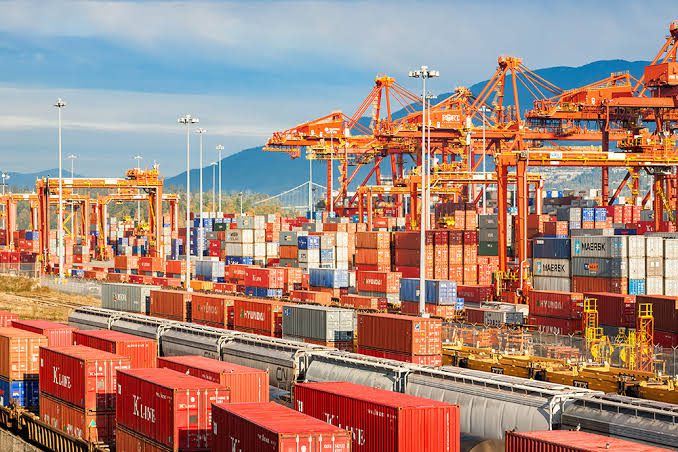
Bank of Canada Governor Tiff Macklem says new U.S. tariffs could push Canada’s fourth-quarter economic growth below 1%, while higher oil prices could add to inflation pressure.
Canada’s economic outlook is facing renewed uncertainty after the Bank of Canada warned that new U.S. tariffs could significantly slow growth in the final quarter of 2026.
Bank of Canada Governor Tiff Macklem said on September 21 that if the new tariffs remain in place, Canada’s fourth-quarter growth could be roughly halved to below 1%.
The warning comes after Canada’s economy rebounded strongly in the second quarter, when GDP grew at an annualized rate of 3.3%.
The combination of trade uncertainty, inflation and higher energy prices is creating a difficult environment for Canadian policymakers, businesses and households.
U.S. tariffs could weigh on Canadian growth
Canada and the United States have deeply integrated economies, with businesses on both sides of the border relying on cross-border trade and supply chains.
Macklem said the latest escalation in tariffs could cause Canadian businesses to delay investment and hiring decisions.
That uncertainty can affect economic activity even before the full financial impact of tariffs becomes visible.
According to the Bank of Canada, the products directly affected by the latest U.S. tariffs represent about 5% of Canada’s goods exports to the United States. Government support programs could help mitigate some of the direct effects, but uncertainty surrounding future U.S. trade policy remains a broader concern.
Canada’s economy had been recovering
The latest warning comes after a period of stronger economic activity.
Canada’s economy grew at an annualized 3.3% rate in the second quarter, as businesses and households adjusted to the trade environment and increased investment and spending.
The Bank of Canada said exports, investment and growth had picked up, while labour-market conditions had also improved.
However, policymakers now face the possibility that renewed trade tensions could reverse some of that progress.
Inflation remains above the Bank of Canada’s target
Economic growth is only part of the challenge.
Canada’s annual inflation rate is around 3%, compared with the Bank of Canada’s 2% target.
That leaves policymakers balancing two competing pressures.
A weaker economy could reduce inflation by lowering demand.
But higher energy prices could push inflation higher.
Macklem warned that oil prices near $100 per barrel could add to Canada’s inflation pressures.
Oil prices create another risk
The continuing conflict in the Middle East has disrupted energy markets and contributed to higher oil and fuel prices.
The Bank of Canada has noted that the effect can extend beyond crude oil itself.
Damage to refining capacity and disruptions to shipping routes have also affected gasoline and diesel prices, increasing costs for consumers and businesses.
For Canadian households, higher fuel prices can affect transportation expenses.
For businesses, higher fuel costs can increase the expense of moving goods and operating equipment.
Those costs can then spread through supply chains.
Canadian dollar also under pressure
Trade uncertainty has also been reflected in financial markets.
Reuters reported that the loonie traded around C$1.41 per U.S. dollar at the time.
Currency movements can affect Canadian consumers and businesses in different ways.
A weaker Canadian dollar can make imports more expensive, while exporters can benefit from more favourable exchange rates.
Canada is looking beyond the United States
Ottawa is also pursuing a longer-term strategy to diversify Canada’s trade relationships.
Canadian Trade Minister Maninder Sidhu said negotiations for separate free-trade agreements with the Philippines and ASEAN were more than 90% complete, with Canada hoping to finalize the agreements by November.
The government has described diversification as part of its broader strategy to strengthen supply chains and expand economic relationships in Southeast Asia.
Canada is also highlighting its growing LNG export capacity as a potential source of energy supply for Asian markets.
What happens next?
The direction of Canada’s economy will depend on several factors over the coming months.
U.S. tariff policy, Canadian business investment, oil prices, inflation and consumer spending will all play important roles.
The Bank of Canada will also have to weigh the competing effects of slower growth and higher energy prices when considering monetary policy.
For Canadians, the economic debate ultimately comes down to several issues that directly affect everyday life: employment, prices, fuel costs, borrowing costs and the strength of the Canadian dollar.
Canada entered the second half of 2026 with stronger growth momentum.
The question now is whether that momentum can survive renewed trade uncertainty with its largest economic partner.



Leave a Reply