

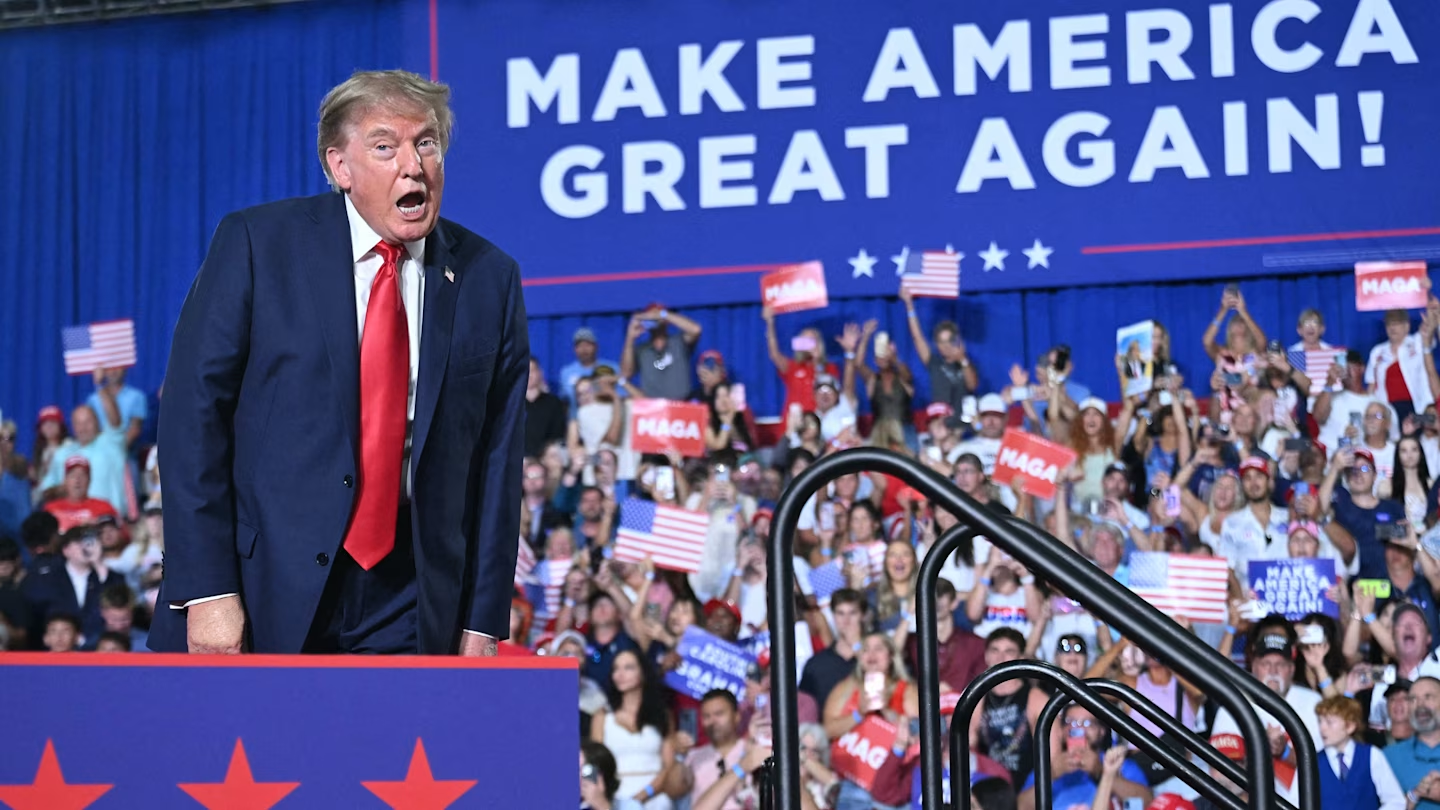
A major midterm setback has triggered an internal reckoning within Trump’s political movement, with supporters questioning his leadership over rising costs, the Iran war and broken promises.
The political movement that helped Donald Trump reshape the Republican Party and return to the White House is facing an uncomfortable question after a major Republican defeat in the 2026 midterm elections: Is MAGA losing faith in the man who built it?
A Reuters investigation published on November 8 found growing frustration among some of Trump’s most loyal supporters, with criticism increasingly directed at the president himself, his advisers and Republican leaders.
One comment captured the mood inside the movement.
“Trump has cost us,” said Michael Little, a businessman and three-time Trump voter, after Republicans suffered major losses in the elections.
His reaction reflects a broader debate developing within the Make America Great Again movement: whether Trump remains its greatest political asset or has become an electoral liability.
A movement questioning its own leadership
Reuters interviewed more than a dozen MAGA activists, influencers, political strategists, Christian nationalist leaders and researchers. The news agency also examined online discussions and podcasts following the election results.
One of the most striking findings came from an analysis conducted for Reuters by data intelligence firm PeakMetrics.
The analysis examined 12,850 sampled posts from a wider universe of 4.6 million Trump-related comments on X and Reddit. More than one-fifth of the self-described MAGA loyalists represented in the sample questioned the movement’s leadership or direction.
Approximately half of that group continued supporting the MAGA movement but no longer backed Trump as its leader. The other half remained supportive of Trump, although critical of his performance.
The findings do not mean that one-fifth of all MAGA voters have abandoned Trump. They show that a significant debate has emerged among supporters participating in the online discussions examined by researchers.
For a movement built around Trump’s political identity, that distinction is important.
The Iran war, rising costs and broken promises
The frustration is not centered on a single issue.
Reuters found that supporters were pointing to several concerns, including rising fuel prices, the war with Iran, the cost of living, political corruption and promises that they believe the administration failed to deliver.
Nearly one-third of the posts assigning blame for the Republican defeat cited concerns about the Iran war and Israel’s influence on American policy.
Another major source of frustration involved the economy and affordability.
Some supporters believe the administration focused too heavily on foreign conflicts and political battles while failing to deliver the economic improvements voters expected.
The controversy surrounding government investigative files related to convicted sex offender Jeffrey Epstein also contributed to accusations that the administration had not fulfilled its promises of transparency.
The result is a growing argument over whether Trump’s priorities have drifted away from the issues that originally brought his supporters together.
Even prominent MAGA voices are divided
The reaction has exposed disagreements among some of the movement’s most influential figures.
Former Trump adviser Steve Bannon argued that MAGA needs to rebuild by returning to an aggressive populist and nationalist agenda. He welcomed Trump’s decision to promote Stephen Miller to White House chief of staff, describing Miller as a strong representative of the movement’s core principles.
Other conservatives have been less supportive.
Republican Representative Marlin Stutzman criticized Miller’s promotion, calling it a bad mistake and arguing that his political tone is unpopular with voters in the Midwest.
Influencer Isabella DeLuca also criticized Republican leaders, arguing that they had become too comfortable assuming voters would support them regardless of their performance.
Meanwhile, conservative commentator Ben Shapiro pointed to a combination of political chaos, corruption and dissatisfaction with the economy as factors behind the Republican defeat.
The disagreements reveal that MAGA is not united on how to respond to the election results.
Some want Trump to return to the movement’s original promises. Others believe the movement must become less dependent on one individual.
Trump responds by doubling down
Rather than signaling a major change in direction, Trump made a significant personnel decision following the election defeat.
On Friday, he promoted Stephen Miller, one of the central architects of his hardline immigration agenda, to the position of White House chief of staff, replacing Susie Wiles.
The appointment was welcomed by some of Trump’s most committed supporters, who viewed it as a sign that the president intends to strengthen rather than moderate his political agenda.
Trump also rejected the idea that his personal presence on the ballot would have produced the same Republican losses. Following the election, he argued that Republicans would have won if he had been a candidate.
He acknowledged that the Iran war had contributed to higher gasoline prices, but said he would make the same decision again.
The White House did not directly answer Reuters’ questions about the reasons behind the Republican defeat or the future direction of MAGA.
A setback for election denial politics
The election results also appear to have weakened another central part of the MAGA movement: claims that American elections are routinely stolen.
Reuters reported that claims of widespread election fraud largely disappeared from prominent right-wing discussions after the midterms.
Candidates who embraced Trump’s false claims about widespread fraud in the 2020 election suffered significant losses.
According to the nonprofit States United Action, election deniers will hold at least 41 fewer congressional and statewide offices next year.
This does not mean all election denial activity has disappeared, but the results represent a significant political setback for candidates who built their campaigns around those claims.
Is MAGA finished — or preparing for its next chapter?
The movement’s future remains uncertain.
Some supporters continue to insist that MAGA belongs to Trump and that any Republican hoping to win the presidential nomination in 2028 will need his political base.
Others argue that the movement must rebuild, return to its populist priorities and become less dependent on Trump’s personality.
The Republican defeat has also strengthened Democrats, who are positioned to exercise greater influence in Congress and in key battleground states.
For Trump, the challenge is no longer simply responding to Democratic opposition. He must also manage divisions among the supporters who helped make his political movement one of the most influential forces in modern American politics.
MAGA is not officially over, and the reporting does not establish that its supporters have abandoned Trump as a whole.
But the question that once seemed unthinkable is now being debated inside the movement itself:
Can MAGA survive politically without Donald Trump — or is Trump becoming the reason it may need to change?
Sources:
- Reuters, November 8, 2026 — “Trump has cost us”: After midterm losses, MAGA asks if it’s over
- Associated Press, November 8, 2026 — Trump and his Justice Department stand defiant as Democrats ready an investigative blitz


Leave a Reply