

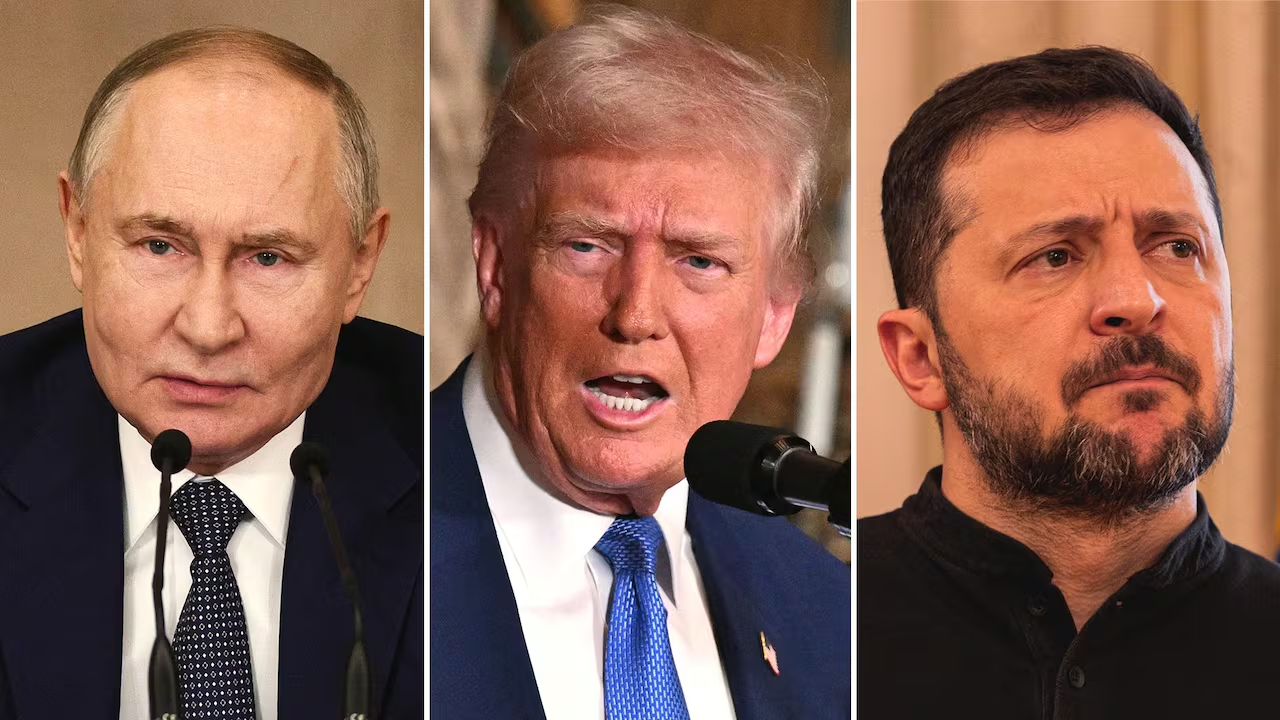
ST. PETERSBURG, Russia — October 21, 2026 — Russian President Vladimir Putin has signaled that Moscow is prepared in principle to resume trilateral negotiations involving Russia, Ukraine and the United States, following a meeting with U.S. special envoy Steve Witkoff in St. Petersburg.
The announcement marks a renewed diplomatic effort to address the war in Ukraine, although there is no confirmed peace agreement or ceasefire. Major disagreements over territory, security guarantees and the future relationship between Russia and Ukraine remain unresolved.
According to reports from Reuters and The Associated Press, the Kremlin said the talks could resume after November 10, potentially opening another channel for negotiations mediated by Washington.
The meeting also coincided with Russia’s release of Stephen Hubbard, a 74-year-old American who had been imprisoned in Russia since 2022.
What Putin agreed to discuss
The Kremlin’s announcement followed a meeting between Putin and Witkoff that lasted nearly three hours. The discussions included the possibility of restarting negotiations in a trilateral format involving Moscow, Kyiv and Washington.
Russian officials described their readiness to resume the talks as being in principle. That wording is important: it indicates a willingness to return to negotiations, not an agreement on the terms required to end the war.
The proposed discussions are expected to address security arrangements for Russia and Ukraine after the conflict. However, Moscow has continued to reject proposals it considers insufficient, while Ukraine has maintained that any settlement must address its security and territorial concerns.
The next steps will depend on whether the parties can agree on a format, agenda and practical conditions for the talks.
Major obstacles remain
Despite the renewed diplomatic activity, the positions of Russia and Ukraine remain far apart on several central issues.
Russia has maintained demands involving Ukrainian territory and NATO membership. Ukraine, meanwhile, has called for meaningful security guarantees and has resisted arrangements that could leave it vulnerable to future attacks.
The question of whether fighting could be frozen along current front lines is also contentious. A ceasefire could reduce immediate violence, but it would not automatically resolve the political and territorial disputes behind the conflict.
European governments and other international partners are also concerned about the long-term security consequences of any settlement. They have argued that an agreement must be sustainable and that Ukraine’s future security cannot be separated from the wider European security environment.
For now, the prospect of renewed negotiations is a diplomatic development rather than proof that either side is ready to compromise on its main demands.
Russia releases American detainee
During the same visit, Russia released Stephen Hubbard, a retired American schoolteacher who had been held in Russian custody since 2022.
Russian authorities accused Hubbard of fighting as a mercenary for Ukraine. He was sentenced following a closed trial in 2024. His U.S.-based lawyer has disputed the allegations, and the U.S. government had designated him as wrongfully detained.
Putin announced Hubbard’s release during the meeting with Witkoff. U.S. President Donald Trump had previously said he asked Putin to release the American.
Witkoff thanked the Russian leader for the release, presenting it as a positive humanitarian development. The episode added a tangible result to a meeting otherwise focused on the difficult question of ending the war.
However, Hubbard’s release should be treated as a separate development from the broader negotiations. It does not establish that Russia and Ukraine have reached a compromise on the terms of a settlement.
What this means for Trump and Ukraine
The renewed diplomatic effort comes as the Trump administration attempts to bring Russia and Ukraine toward a negotiated outcome.
Washington has sought to play a central mediating role, but its relationships with Moscow and Kyiv have faced pressure over military assistance, intelligence cooperation and the terms of a possible agreement.
For Ukraine, a return to talks could create another opportunity to seek security guarantees and test whether Russia is prepared to negotiate beyond general declarations. For Moscow, negotiations provide a channel to present its demands and discuss the security arrangements it says must follow the conflict.
The crucial question is whether these discussions can produce specific commitments rather than another round of statements without practical progress.
What happens next?
The Kremlin has indicated readiness to resume trilateral talks after November 10, but the timing and format will need to be confirmed by the parties involved.
Even if negotiations restart, substantial challenges will remain. A lasting settlement would require agreement on security, territory and the mechanisms needed to implement and monitor any deal.
Until concrete agreements are announced, the war remains unresolved.
Putin’s signal creates a new diplomatic opening, while Hubbard’s release provides a separate result from the meeting. Whether this leads to meaningful progress will depend on what Russia, Ukraine and the United States are prepared to put on the table in the coming weeks.
For now, the key development is renewed willingness to talk — not an end to the war.
Sources: Reuters and The Associated Press, October 21, 2026.
Leave a Reply