

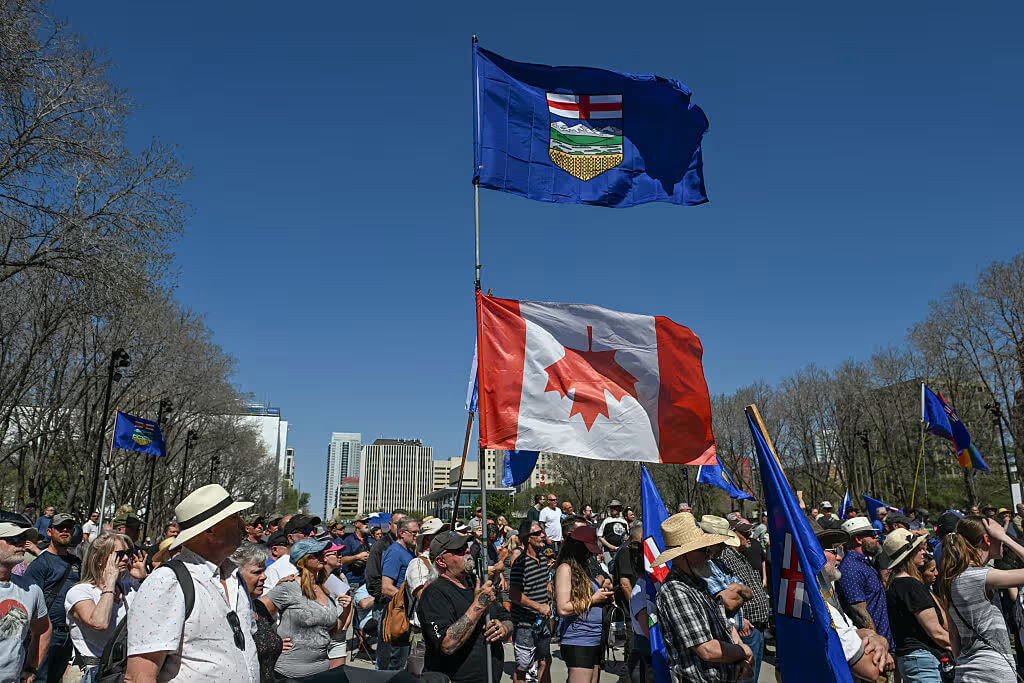
Alberta is holding a politically significant vote on October 19 that could open the way to a future referendum on independence from Canada. The ballot does not ask voters to make Alberta independent immediately. Instead, it asks whether the provincial government should begin the legal process required for a later binding referendum on separation.
The vote comes after years of disputes between Alberta and the federal government over energy policy, provincial authority, resource development and the province’s place within the Canadian federation. Those disagreements have helped fuel an independence movement that has become a more visible part of Alberta’s political debate.
Prime Minister Mark Carney has campaigned for national unity, warning about the consequences of dividing the country. Alberta Premier Danielle Smith, who has opposed independence, allowed the vote to proceed amid pressure from separatist groups within the province.
What are voters actually deciding?
The central distinction is important: the October 19 ballot is not a final vote for Alberta to leave Canada.
Under the wording described by Elections Alberta, voters are being asked whether the provincial government should commence the legal process needed to hold a binding provincial referendum on whether Alberta should separate from Canada.
A vote in favour of beginning that process would not automatically make Alberta independent. A future referendum, further legal and constitutional questions, and negotiations involving other governments would remain significant hurdles.
That distinction has become a major part of the campaign. Supporters of the initiative see the vote as a way to give Albertans a formal route to decide their future. Opponents argue that separation could create substantial economic, legal and political uncertainty.
Why the independence movement has grown
Alberta is a major energy-producing province, and its oil and gas sector plays an important role in the Canadian economy. Disagreements over pipelines, environmental policy, federal regulation and the distribution of public revenues have contributed to long-running tensions with Ottawa.
Some residents believe the federal government does not adequately reflect Alberta’s economic priorities or political preferences. Separatist groups have used those grievances to argue for greater autonomy, and some have called for independence.
Others argue that Alberta benefits from being part of Canada through access to a national market, shared institutions, federal services and the stability of the existing constitutional system. They warn that separation could create uncertainty over public finances, trade, pensions, borders, Indigenous rights and the future of energy exports.
These are not merely symbolic questions. Any serious move toward separation would involve complex negotiations over the legal and economic relationship between Alberta and the rest of Canada.
Carney and Smith face competing pressures
Carney has made the case for keeping Canada united, particularly amid wider economic and political uncertainty. His position reflects concerns that a separation debate could distract from national priorities and complicate cooperation between provincial and federal governments.
Smith faces a different political challenge. She has opposed independence but has also faced pressure from voters and activists who want a formal process to consider it. Allowing the vote to proceed has brought the question into the political mainstream without meaning that the provincial government endorses separation.
The campaign has also revealed divisions within the independence movement itself. Supporters disagree over strategy and what should happen after the vote, while opponents question the financial and legal implications of pursuing separation.
What happens after the vote?
The result could determine whether the provincial government is pushed toward beginning the legal process for a future binding referendum. It will not, by itself, settle the question of independence.
Even if voters support beginning that process, the path toward separation would involve major constitutional issues. The rights and interests of Indigenous peoples, existing treaties, federal law, negotiations with Ottawa and the economic consequences would all be central to any future debate.
A vote against beginning the process would not necessarily erase separatist sentiment, but it would affect the movement’s immediate political momentum.
As of this article’s publication, the final result of the October 19 vote has not been confirmed in the reporting cited here. It would be premature to declare that Alberta has chosen independence or that the province is leaving Canada.
Why the result matters beyond Alberta
The vote is being watched as a test of provincial discontent and the strength of Canadian national unity. Its significance extends beyond the ballot itself because it may influence future debates about provincial autonomy, energy policy and the relationship between regional governments and Ottawa.
For now, the key question is whether Albertans want to open a formal route toward a future independence referendum. The larger question — whether Alberta should ultimately separate from Canada — remains unresolved.
The October 19 vote could mark a significant moment in Alberta’s political debate, but it is a step in a possible process, not a declaration of independence.
Sources: Associated Press — Albertans vote on path to independence · The Guardian — Alberta goes to polls in referendum · Elections Alberta — official election information.



Leave a Reply