

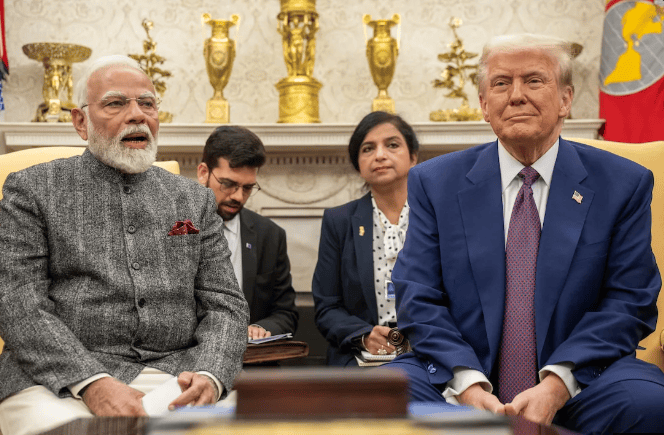
Trade negotiations between India and the United States have reached a major obstacle, with India’s finance minister saying additional concessions could be extremely difficult.
Finance Minister Nirmala Sitharaman described the talks as having reached a “plateau” and said there was limited room for further compromise. Negotiations are continuing, but expectations for a quick agreement have weakened.
Russian oil creates the biggest problem
The dispute is becoming more complicated because of India’s continued purchases of Russian oil.
President Donald Trump recently signed legislation giving him authority to impose tariffs of up to 100% on countries that buy significant quantities of Russian oil.
India is one of Russia’s biggest oil customers.
That puts New Delhi in a difficult position.
Cutting Russian oil imports could increase fuel costs and place additional pressure on government finances. Maintaining those purchases, however, could expose Indian exports to the U.S. market to higher tariffs.
India pushes back
Sitharaman criticized the increasing use of tariffs to address trade imbalances.
She argued that trade disagreements should be handled through negotiations and mutual concessions rather than increasingly aggressive tariff measures.
The United States, meanwhile, wants to reduce its trade deficit with India.
U.S. Trade Representative Jamieson Greer said last week that a trade agreement was not imminent after talks with Indian Trade Minister Piyush Goyal.
Why this matters
The United States is India’s largest export destination.
That gives Washington significant economic leverage, while India’s position as a major buyer of Russian energy gives New Delhi an important role in the broader confrontation over Moscow’s oil revenues.
The dispute therefore extends beyond a normal bilateral trade negotiation.
It connects U.S.-India relations with the wider competition involving Russia, energy markets and Western sanctions.
For now, both sides remain at the negotiating table.
But India’s latest public comments show that reaching a final agreement could take significantly longer than previously hoped.


Leave a Reply