

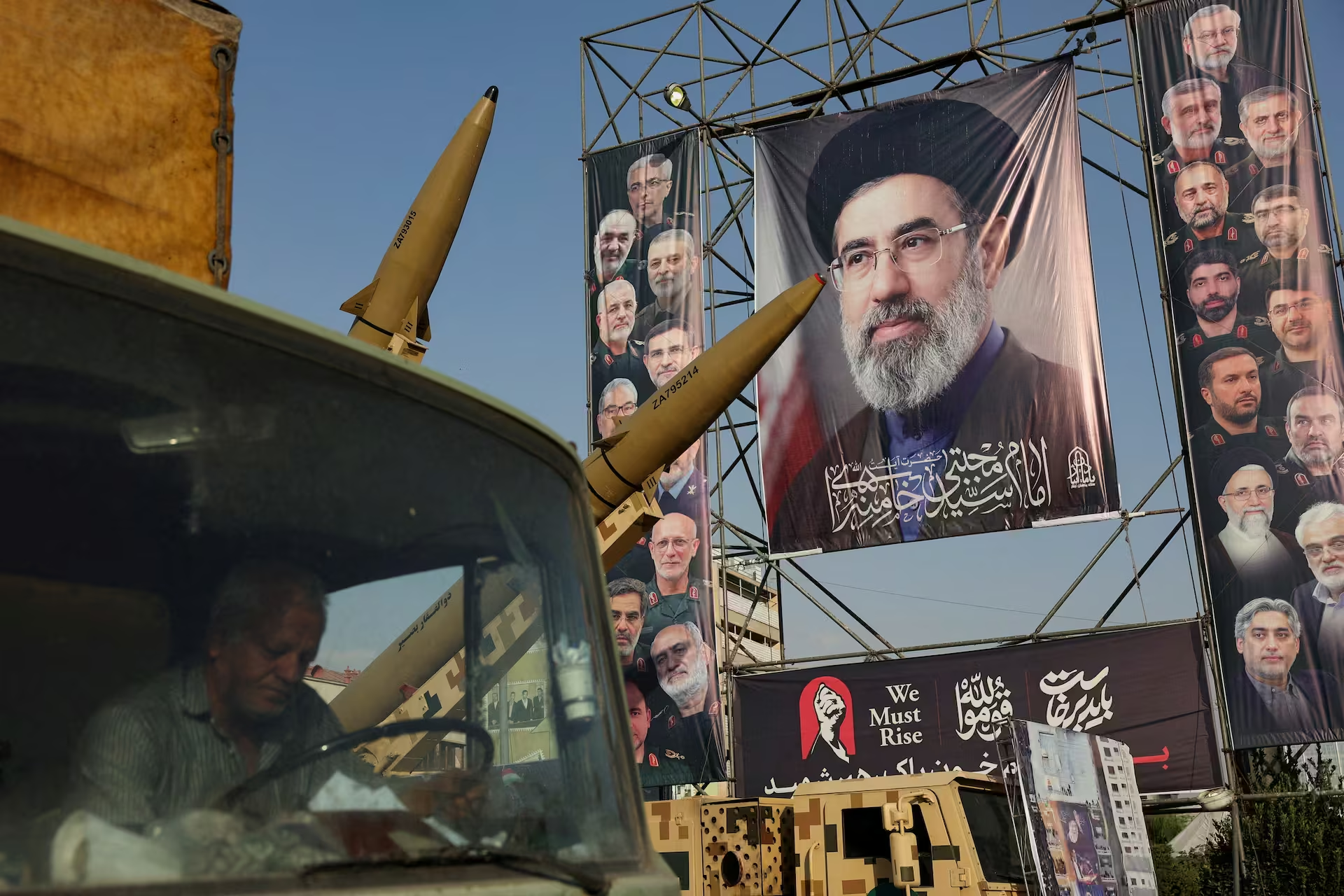
Iran’s Supreme Leader Mojtaba Khamenei has ordered the military to prepare for an immediate response to any new attack, while a senior security official says Tehran is debating whether to maintain its longstanding ban on nuclear weapons.
Iran has issued one of its strongest warnings yet to the United States and Israel, raising fresh concerns that the conflict could enter a more dangerous phase if diplomatic efforts fail.
Iran’s Supreme Leader Mojtaba Khamenei has instructed the country’s armed forces to respond immediately and forcefully to any renewed military or terrorist attack, according to a statement released by his office on Saturday.
The warning included a particularly significant phrase: any response should come “without geographical limitations.”
The statement signals that Tehran wants its potential adversaries to understand that another attack could trigger retaliation extending beyond Iran’s borders.
According to the statement, senior military commanders briefed Khamenei on the country’s readiness along the Gulf coastline, around the Strait of Hormuz and the Gulf of Oman, as well as on Iran’s northwestern and southeastern borders.
The commanders also reported a substantial increase in the production of ammunition and reconnaissance, support and combat equipment.
Iran’s nuclear policy becomes a central question
The military warning was accompanied by another development with potentially far-reaching consequences.
Mohsen Rezaei, a senior Iranian security official, said Iran is debating whether to maintain its longstanding ban on nuclear weapons if hostilities resume.
The statement does not mean that Tehran has decided to develop nuclear weapons or formally abandoned its existing position. No decision to change the policy has been announced.
However, the fact that the question is being discussed publicly highlights how the conflict could affect Iran’s nuclear calculations.
For Washington, preventing Iran from obtaining a nuclear weapon remains one of the central objectives of its policy toward Tehran.
For Iran, the nuclear issue is closely connected to sanctions, security guarantees and the future of its military and economic position in the region.
Any shift in this debate could have consequences far beyond the current confrontation.
Qatar attempts to prevent another outbreak of fighting
While Tehran is issuing military warnings, diplomatic efforts are continuing.
Iranian negotiators met Qatari mediators in Doha on Saturday, following more than 12 hours of discussions between Iranian and Qatari representatives in Tehran the previous day, according to Reuters.
The talks are being coordinated through regular contacts with Washington.
Qatar has proposed a seven-day confidence-building plan under which the United States and Iran would take gradual steps toward broader negotiations. However, an Iranian official said Tehran considered the proposal insufficient.
Iran has also presented its own seven-day proposal, which includes lifting the US blockade of Iranian ports, unfreezing Iranian assets and accepting an Iranian-backed shipping route through the Strait of Hormuz.
The two sides therefore remain divided over the conditions that should come before broader negotiations.
Iranian Foreign Minister Abbas Araqchi said Tehran was reviewing a letter from US Vice President JD Vance and described the Iranian proposal as the only plan currently on the table to reopen the strategic waterway.
Trump has not ruled out military action
The diplomatic efforts come as President Donald Trump weighs his next move.
US Secretary of State Marco Rubio said on Saturday that Trump had not yet decided whether to authorize another round of strikes against Iran.
Rubio said the president would prefer to resolve the conflict through diplomacy, while stressing that the United States remains prepared to act if necessary.
Regional governments are concerned that military action could resume after the US midterm elections scheduled for November 3.
Trump has previously suggested that the conflict could be brought to an end soon, but has insisted that any settlement must include a guarantee that Iran will never obtain a nuclear weapon.
The uncertainty surrounding Washington’s next decision is adding pressure to the diplomatic process.
Why the Strait of Hormuz matters to the entire world
The confrontation is not limited to military and nuclear questions.
The Strait of Hormuz is one of the world’s most strategically important maritime routes, carrying a major share of internationally traded oil and other energy supplies.
Any disruption to shipping through the waterway could affect energy prices, international trade and economies that depend heavily on imported fuel.
Iran’s demands over the strait, combined with the US blockade of Iranian ports and the continuing dispute over sanctions, make an agreement particularly difficult.
A failure to reach a settlement could therefore create consequences well beyond the Middle East.
A dangerous choice between diplomacy and escalation
For now, neither a new US attack nor a breakthrough agreement has been confirmed.
Iran is warning that any renewed military action will be met with a forceful response. At the same time, its officials are discussing the future of the country’s nuclear weapons ban while negotiations continue through Qatar.
Washington says diplomacy remains its preferred option, but has not excluded military action.
The coming days could prove decisive for the region. Whether the two sides move toward a negotiated settlement or another round of fighting may depend on whether they can bridge their differences over nuclear restrictions, sanctions, maritime security and the future of the Strait of Hormuz.
The central question is no longer only whether the United States and Iran can reach an agreement. It is whether the next escalation could fundamentally change the region’s security balance.
Source: Reuters — Iranian envoys meet Qatari mediators · Axios — Iran’s supreme leader orders maximum response · Reuters — Iran’s nuclear weapons debate · Associated Press — Iran’s warning and regional diplomacy.


Leave a Reply