

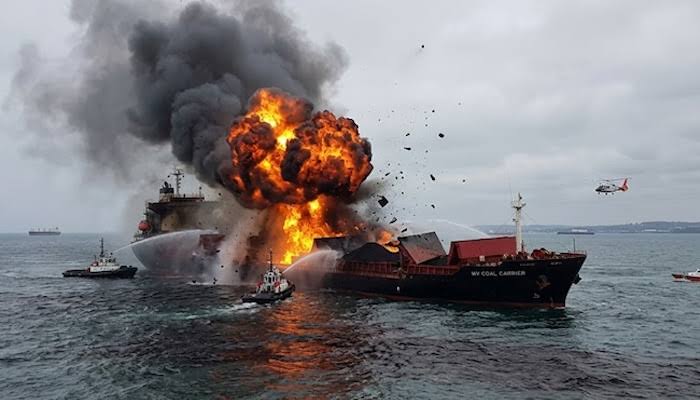
A UK maritime agency reports fresh attacks on oil ships while Washington prepares a larger naval force in the region.
The UK Maritime Trade Operations agency (UKMTO) reported attacks on oil tankers in the Strait of Hormuz on Saturday, according to Al Jazeera’s live coverage of the Iran war. Details such as the vessels involved, damage and casualties had not been confirmed at the time of writing, and we will update this report.
The incident fits a pattern. Since the war between the United States and Iran began, the strait has become one of its central flashpoints. Before the conflict, the waterway between Iran and Oman was open to shipping and carried roughly a fifth of the world’s traded oil and gas. Reporting from August by dpa and others said Iran had largely blocked traffic through threats and attacks, and that earlier tanker strikes were reported by UKMTO off the Omani coast. The agency has repeatedly urged ships to transit with caution.
The political fight over the strait. Iran says the waterway cannot return to the pre-war regime of free navigation and that vessels must follow routes it approves. Gulf states oppose mandatory payments to Tehran, UkraNews reported. Control over Hormuz is one of the main obstacles in peace talks, and it keeps producing new flare-ups.
More US power on the way. Al Jazeera’s explainer published on Friday says that by the end of November, three US aircraft carriers and two amphibious landing groups are expected to be positioned near Iran. Its headline also refers to about 10,000 US troops. The war started on February 28 with US-Israeli strikes on Iran, and the US has repeatedly weighed adding troops and ships to give President Trump more military options, according to earlier reporting by AFP and others.
A wider regional picture. Al Jazeera’s live blog also reports intensified fighting in Yemen, where the Yemeni army claims it inflicted more than 1,500 Houthi casualties in 24 hours. That figure is a claim by one side and has not been independently confirmed.
Why it matters beyond the region. Any prolonged disruption in Hormuz can raise fuel and shipping costs for consumers and businesses in the US, Canada and Europe. Europe is also working on plans to release emergency diesel reserves, according to Al Jazeera, though key operational details are still missing.
Sources: Al Jazeera live coverage and explainer (2–3 October 2026); dpa/GNA (27 August 2026); AFP via Jordan Times. This article will be updated as details are confirmed.



Leave a Reply