

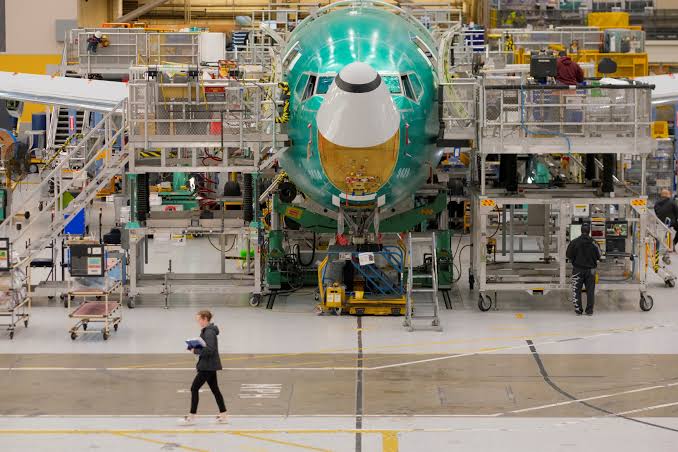
The United States is slowing exports of aircraft parts to China as the Trump administration seeks additional leverage in negotiations with Beijing, according to people familiar with the matter cited by Reuters.
The move places the aviation industry at the center of the latest phase of the U.S.-China trade dispute, linking aircraft supplies to a broader struggle over tariffs, rare earth minerals and strategic supply chains.
Washington Tightens Aircraft-Part Licensing
According to Reuters, the U.S. Commerce Department has slowed the licensing process for airplane parts destined for China in recent weeks.
Officials have also discussed possible export regulations that could make it easier to restrict the shipment of certain aircraft components, including landing gear and aviation hydraulic fluid.
The Commerce Department has also limited the number of parts licensed for shipment to China’s state-owned aircraft manufacturer COMAC, according to sources cited by Reuters.
The White House and Commerce Department did not immediately respond to Reuters requests for comment, while China’s embassy in Washington also did not immediately respond to questions about the latest measures.
Rare Earths Are Part of the Bigger Dispute
The aircraft restrictions come as Washington seeks to reduce China’s leverage over rare earth minerals.
Those materials are important to a wide range of industries, including vehicle manufacturing, semiconductor production and aerospace.
The United States and China have been negotiating over several major economic issues, including access to Chinese rare earths, agricultural trade and advanced technology.
The aviation sector is therefore becoming another part of a much broader economic relationship between the world’s two largest economies.
China Has Asked for Parts for 200 Boeing Jets
The dispute could also affect Boeing.
Reuters reports that China has sought several years of spare-parts supplies for 200 Boeing aircraft it agreed to purchase from the U.S. planemaker.
The United States has been reluctant to provide long-term guarantees for those parts, according to sources familiar with the matter.
The issue highlights how aircraft supply chains have become increasingly connected to geopolitical and trade policy.
Trade Truce Has Not Removed Strategic Tensions
The latest measures come despite a period of reduced tensions between Washington and Beijing.
The two countries held economic negotiations in September and agreed to extend their tariff truce into January 2027 while working on more difficult trade issues.
But disagreements remain over rare earths, industrial policy, technology and market access.
The new aircraft-part restrictions suggest that even while tariffs are being negotiated, both governments continue to look for leverage in strategically important industries.
Why the Aviation Industry Matters
Aircraft manufacturers rely on complex international supply chains. Engines, navigation systems, hydraulic components and other specialized parts can come from companies located across multiple countries.
That means restrictions affecting a relatively small number of critical components can have consequences beyond the individual suppliers involved.
China is also trying to expand its domestic commercial aviation industry through COMAC, making access to foreign technology and components strategically important.
For U.S. companies, China remains a major aviation market, while Beijing is simultaneously seeking to reduce dependence on foreign suppliers.
What Happens Next?
The key question is whether Washington’s latest steps remain limited or develop into broader export restrictions.
The outcome could depend on the next stage of U.S.-China negotiations, particularly discussions involving rare earth minerals, aircraft supplies, tariffs and technology.
For now, the aviation industry has become another pressure point in the increasingly complex economic relationship between Washington and Beijing.


Leave a Reply